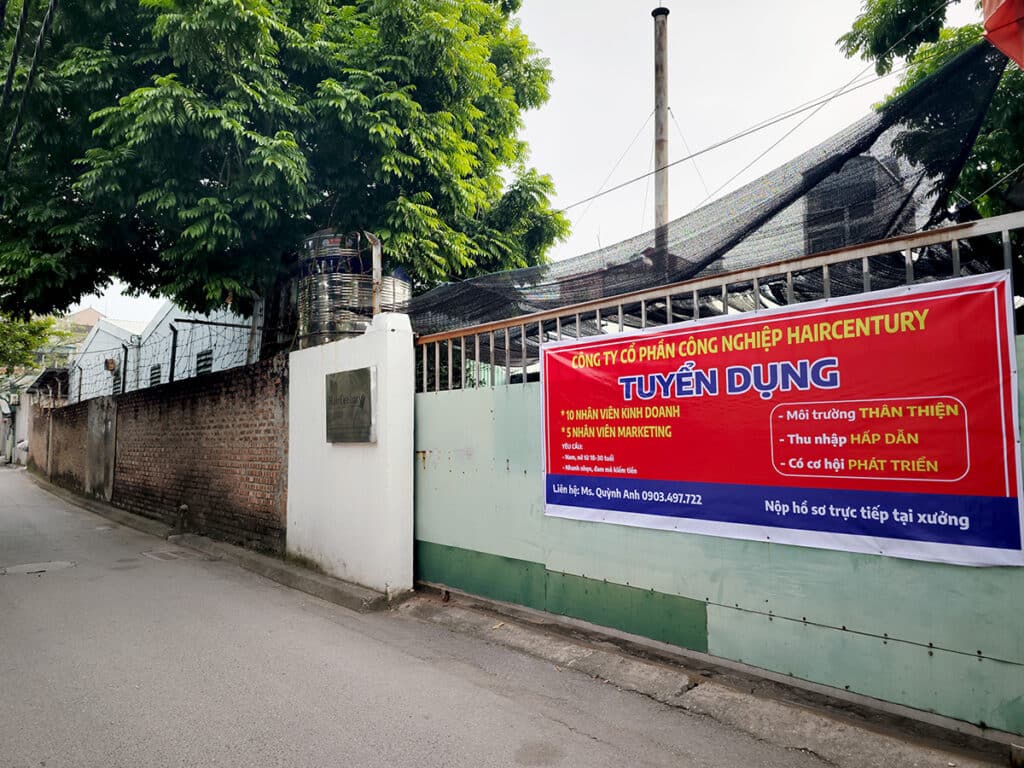
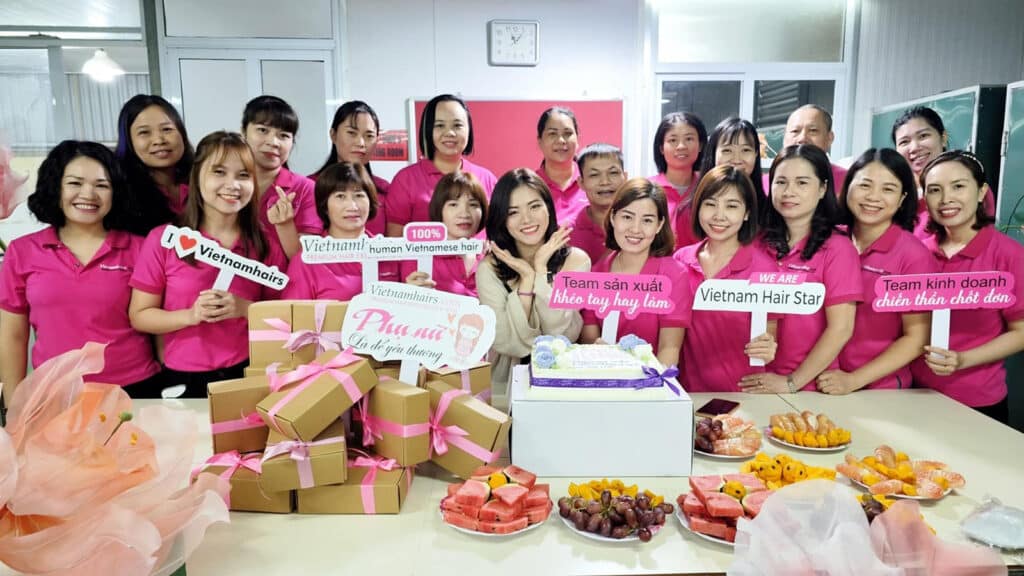
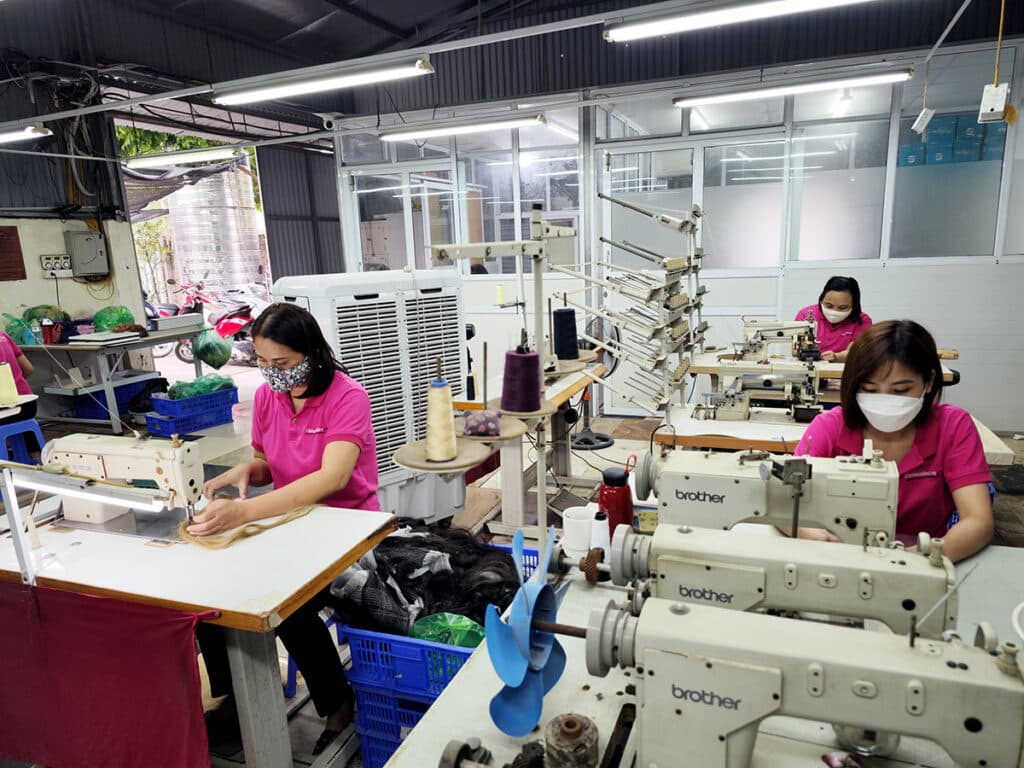
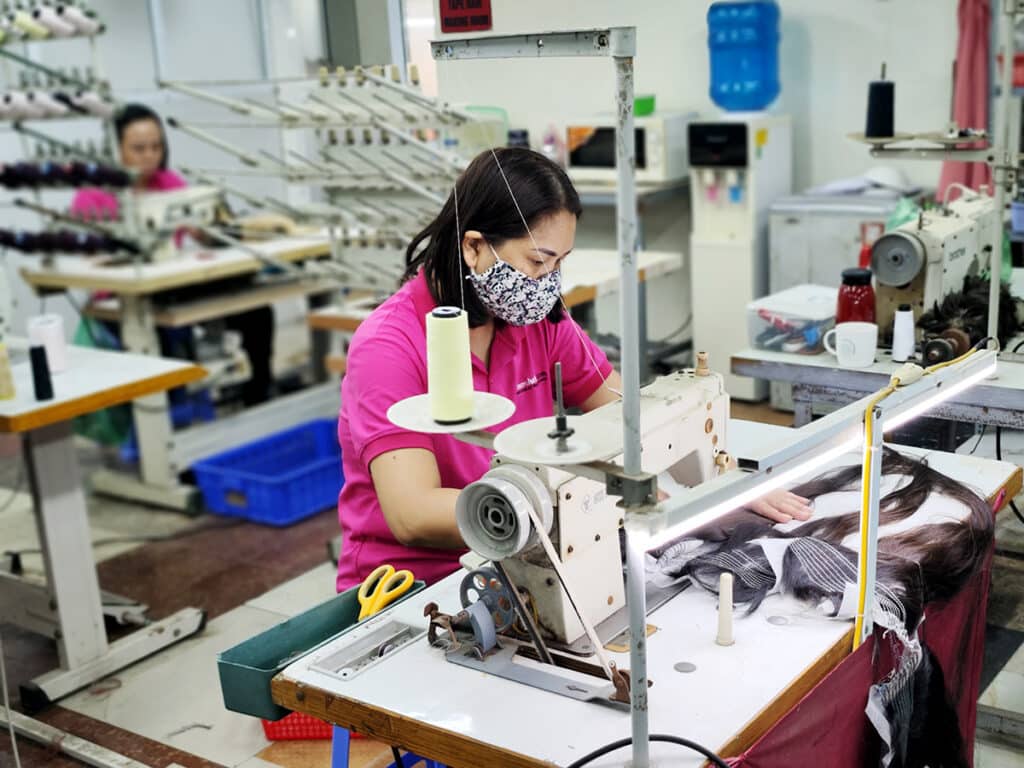
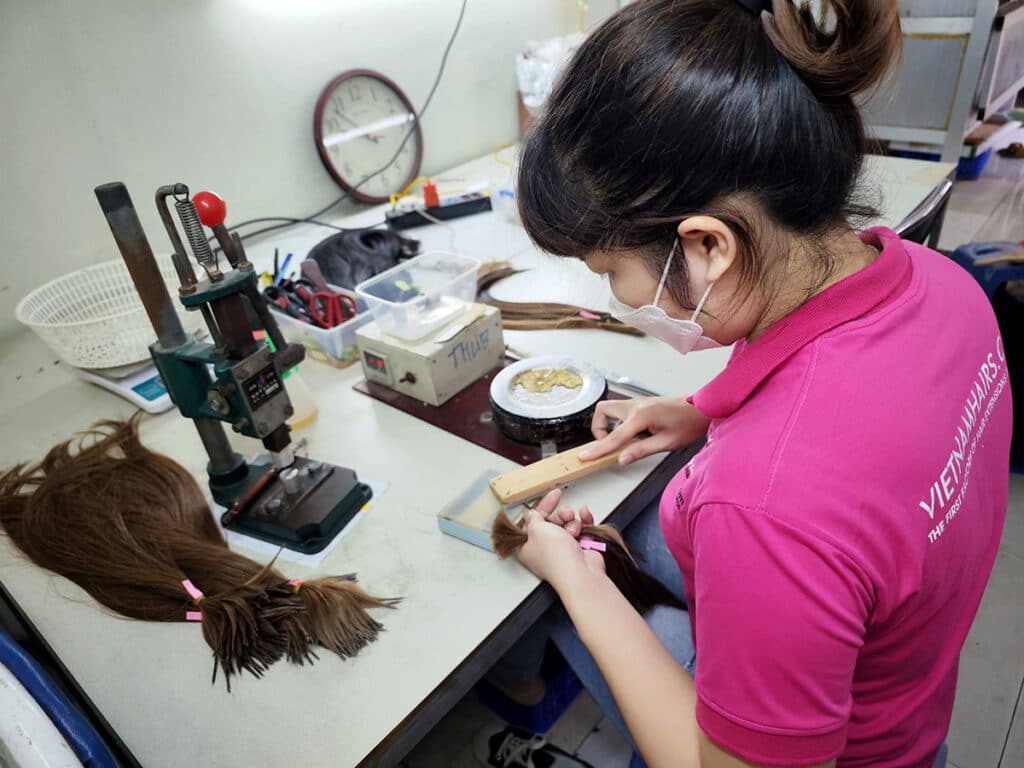
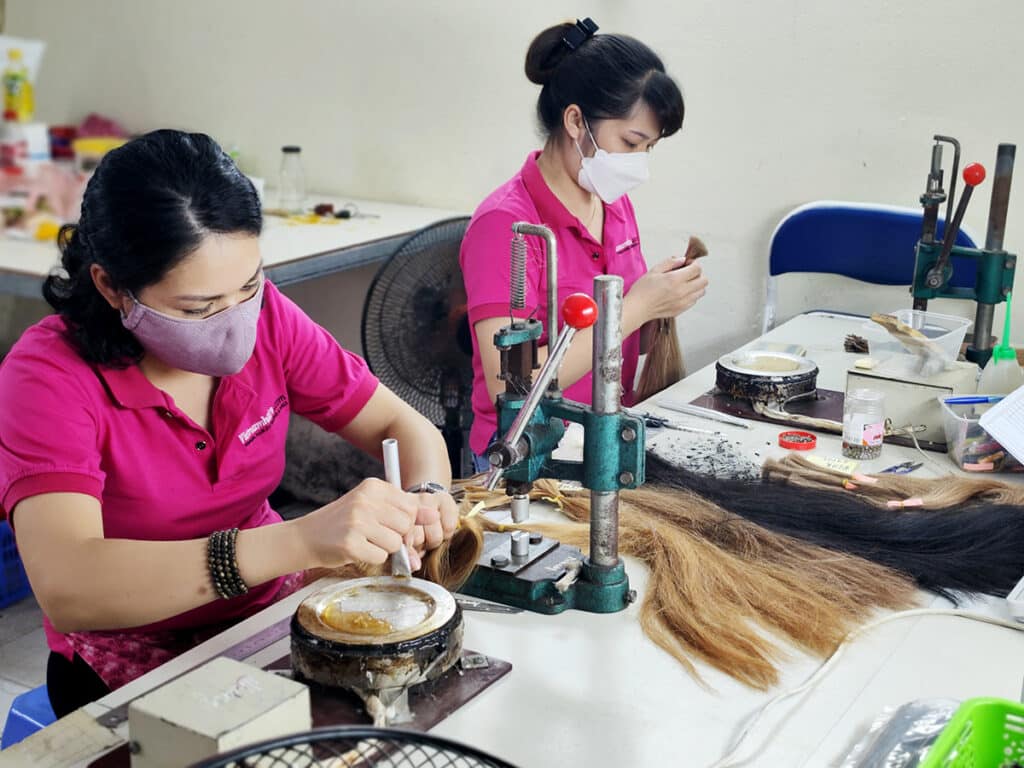
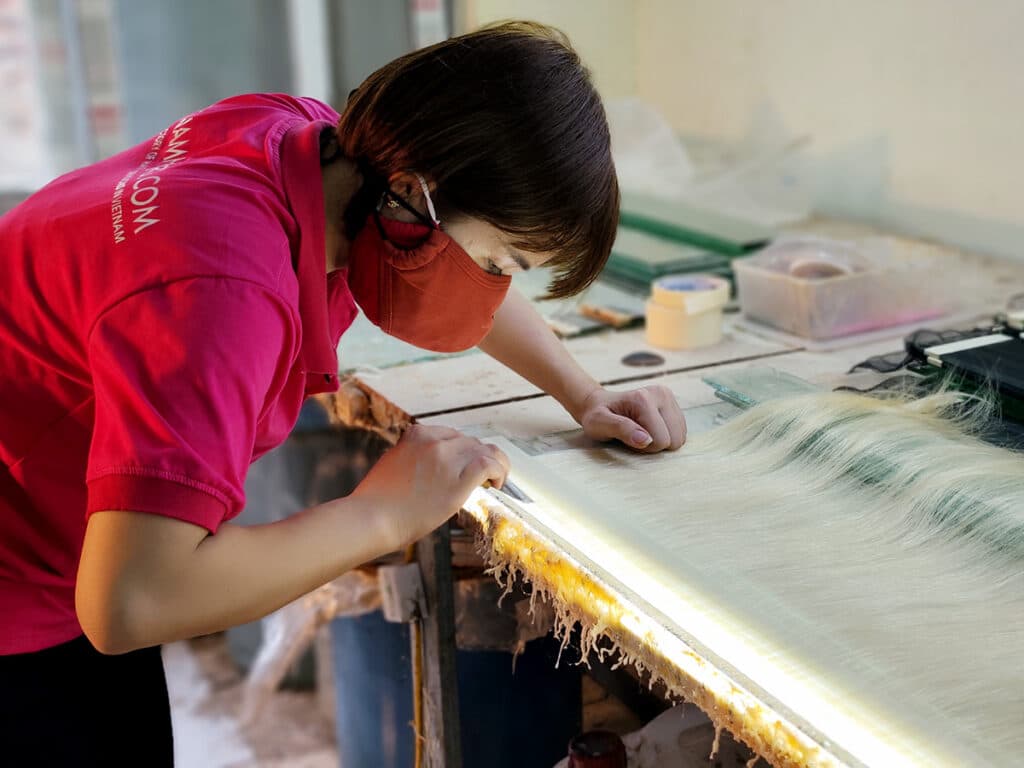
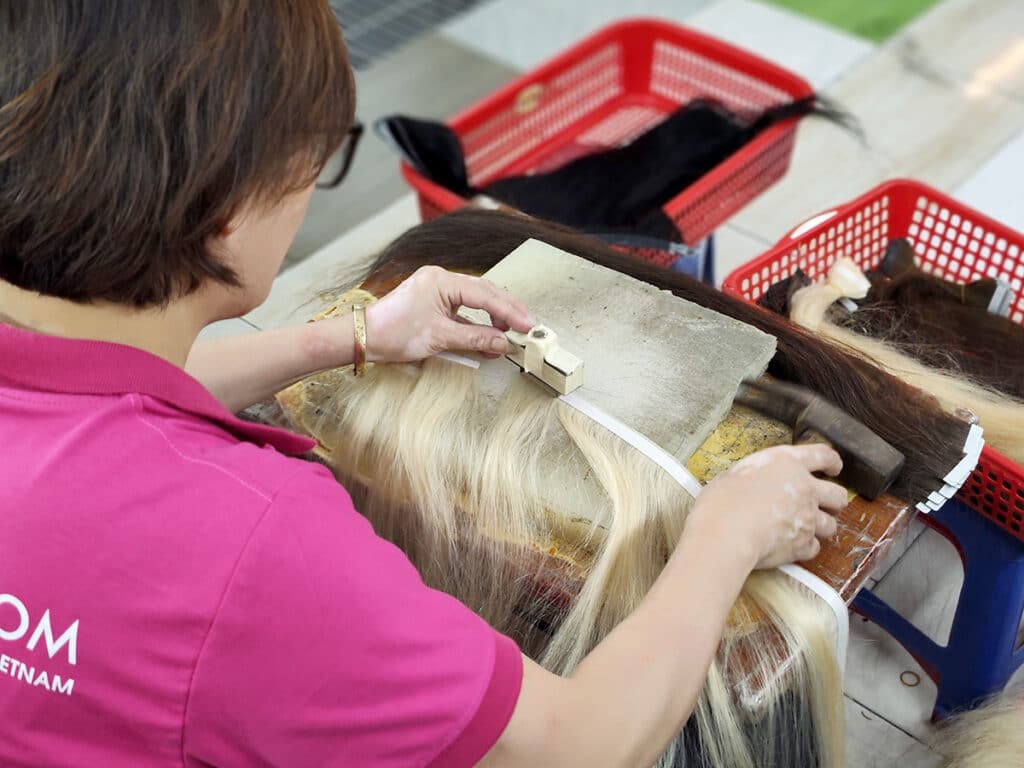
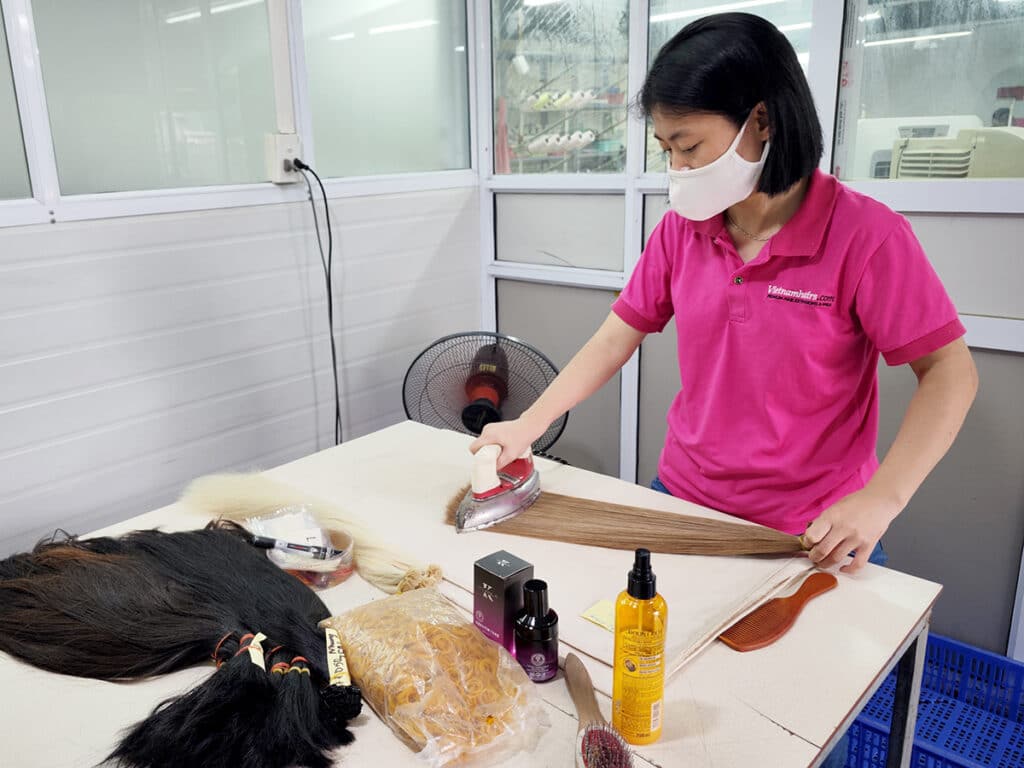
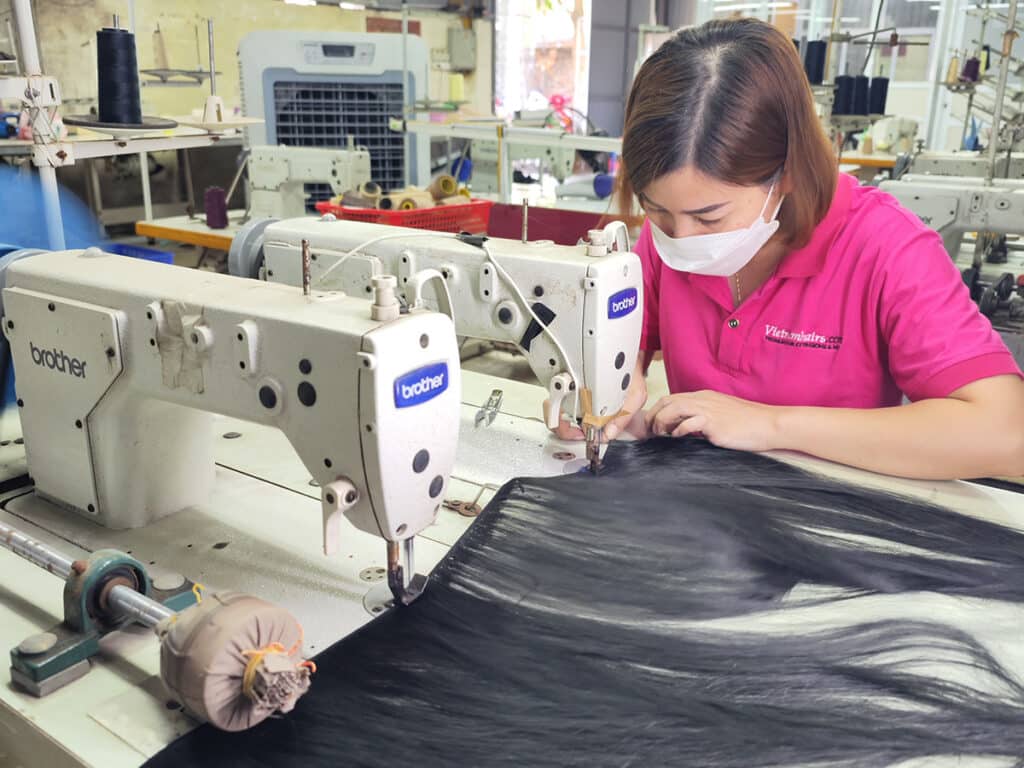
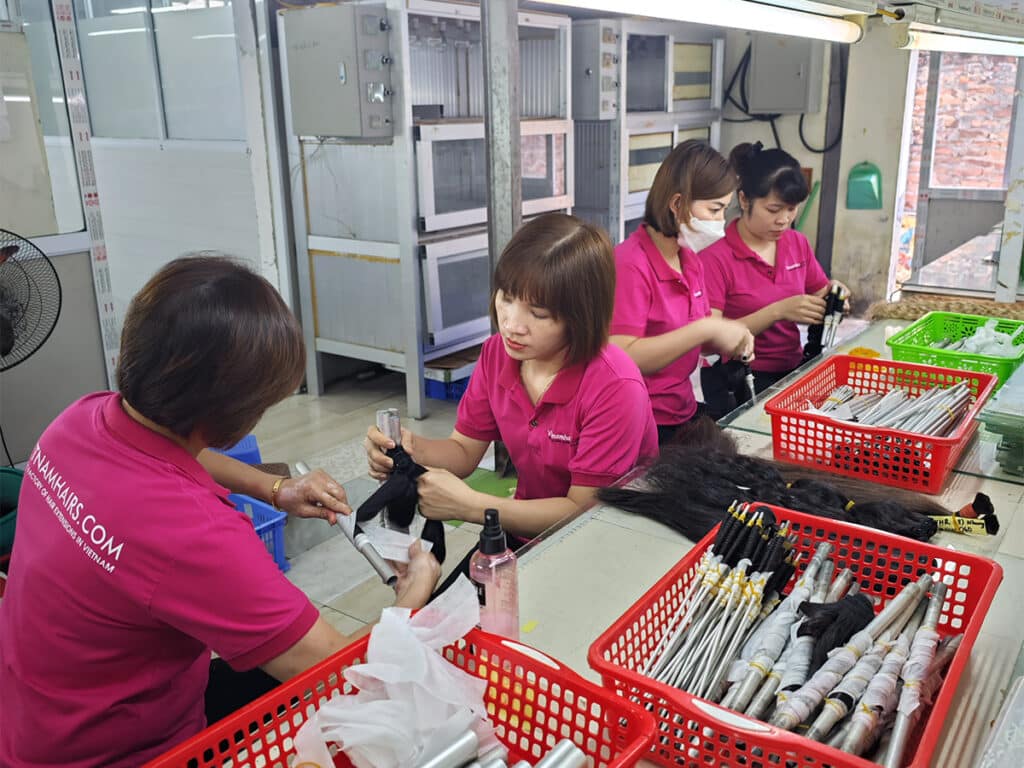
Every bundle sold on VietnamHairs.com is made in our own workshop in Long Bien, Hanoi. Raw hair is sorted by length and texture, hackled, washed and dried, drawn to the density you ordered, coloured if needed, and then made by hand or machine into wefts, keratin tips, tape-ins, clip-ins or wigs. Each finished order is checked, weighed, photographed and filmed before it is packed.
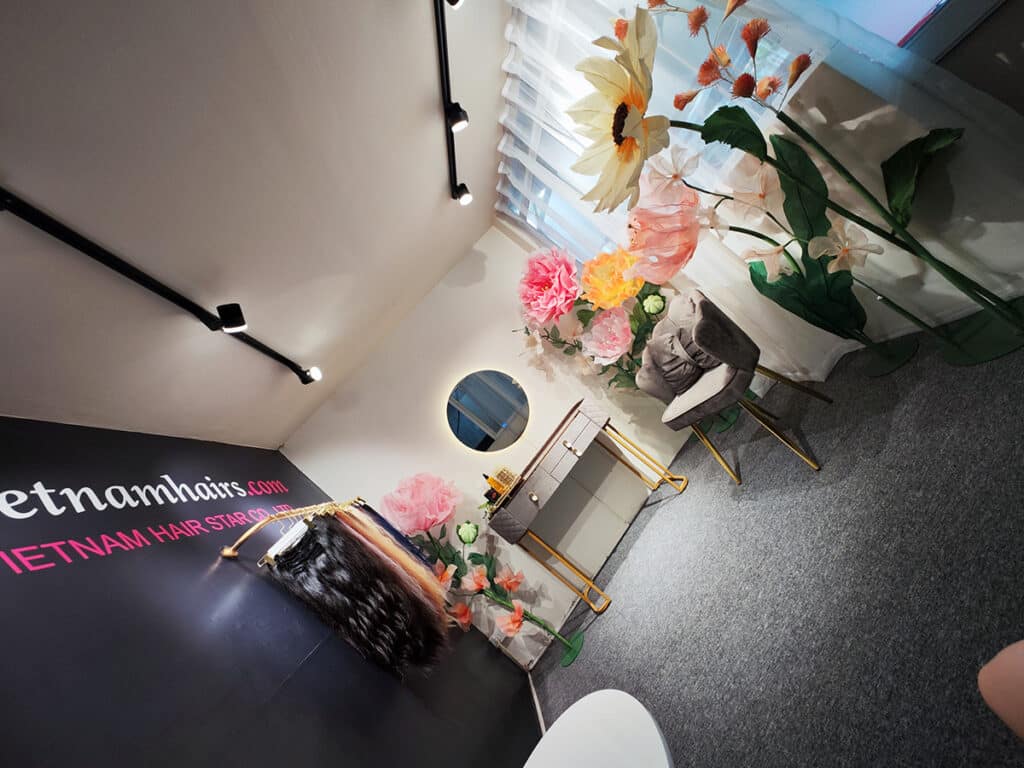
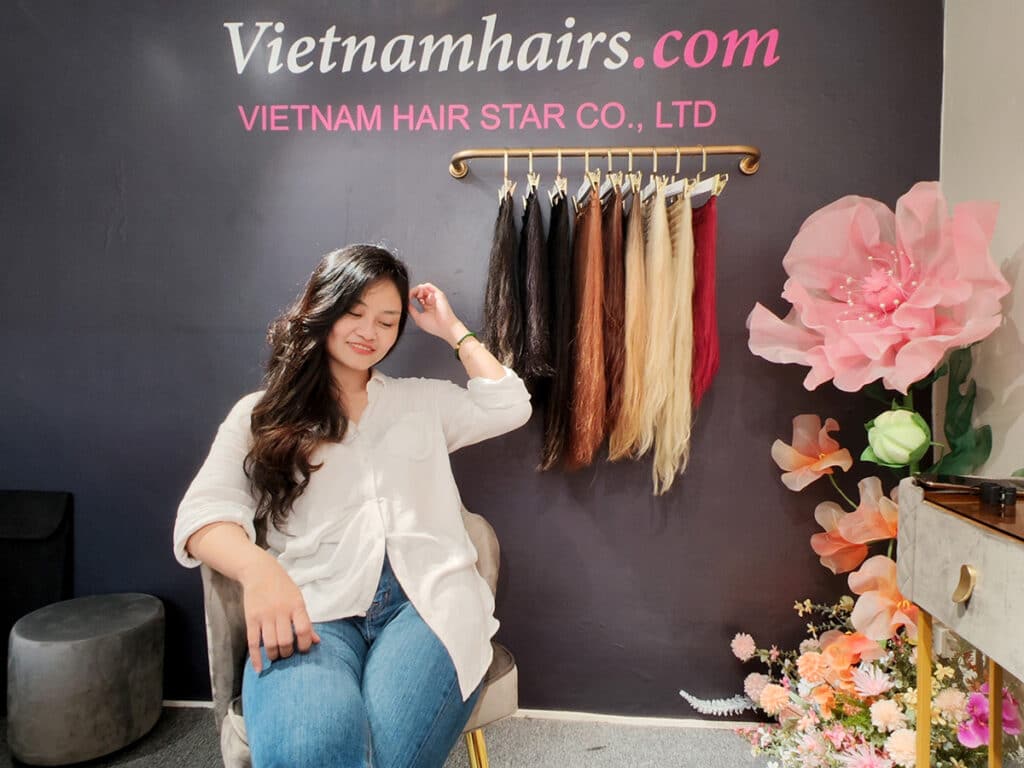
Below is the route your hair takes through the factory. All photos on this page were taken in our workshop and show our own staff.
We buy hair through a network of hundreds of collectors who buy it from women across Vietnam. Hair is cut as a ponytail or trimmed at the root, then tied with a rubber band at the top so that every strand keeps its root-to-tip direction. Vietnamese hair is naturally dark (#1, #1B or #2), fine and strong; most of it is straight or slightly wavy.
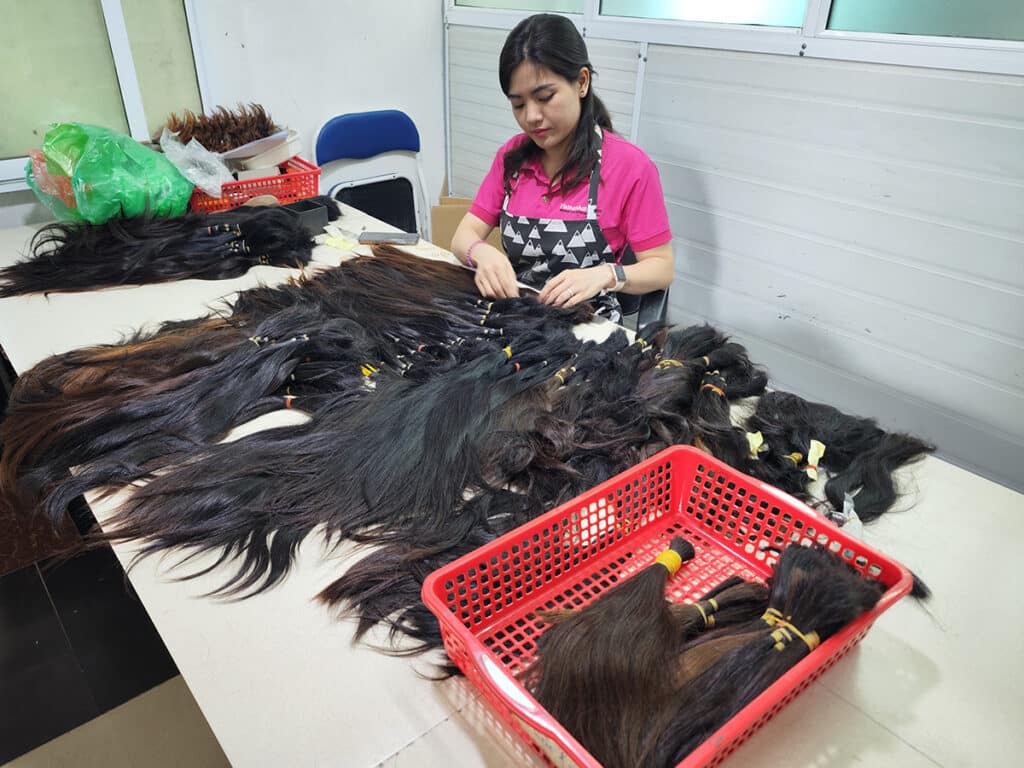
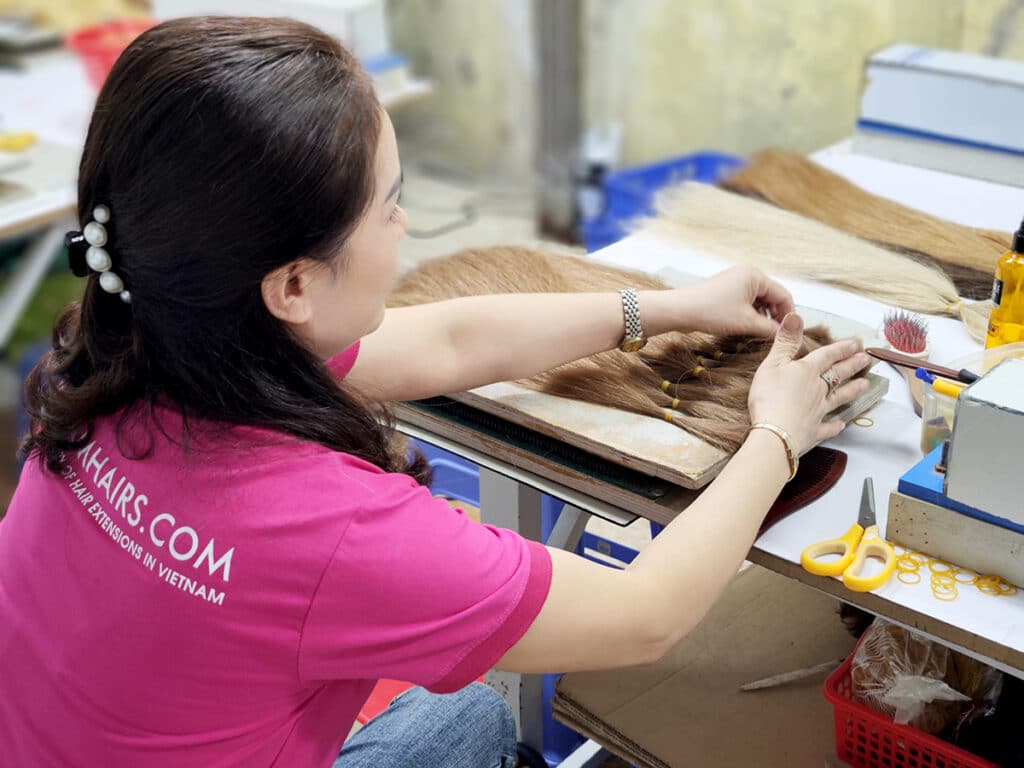
Raw bundles are graded one by one. We separate hair by length (in centimetres), by texture (straight, slightly wavy, wavy) and by natural shade, and set aside hair that is too damaged, grey or chemically treated for the grade it was sold as. A single-donor bundle that passes this step is kept as virgin (one woman) hair.
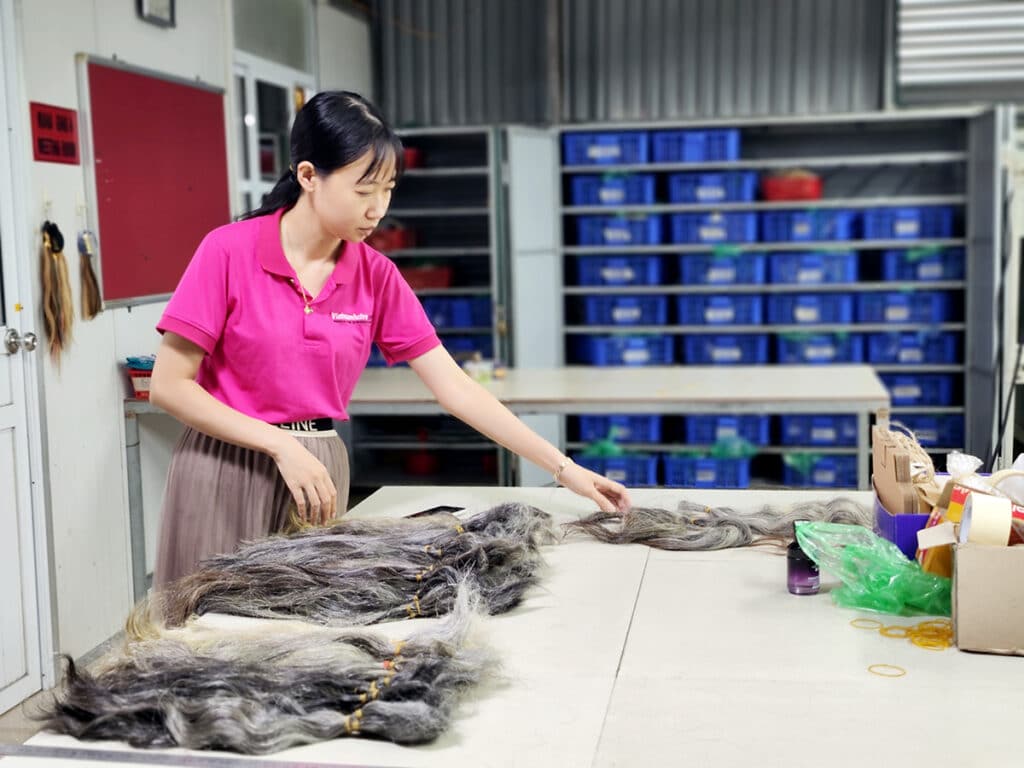
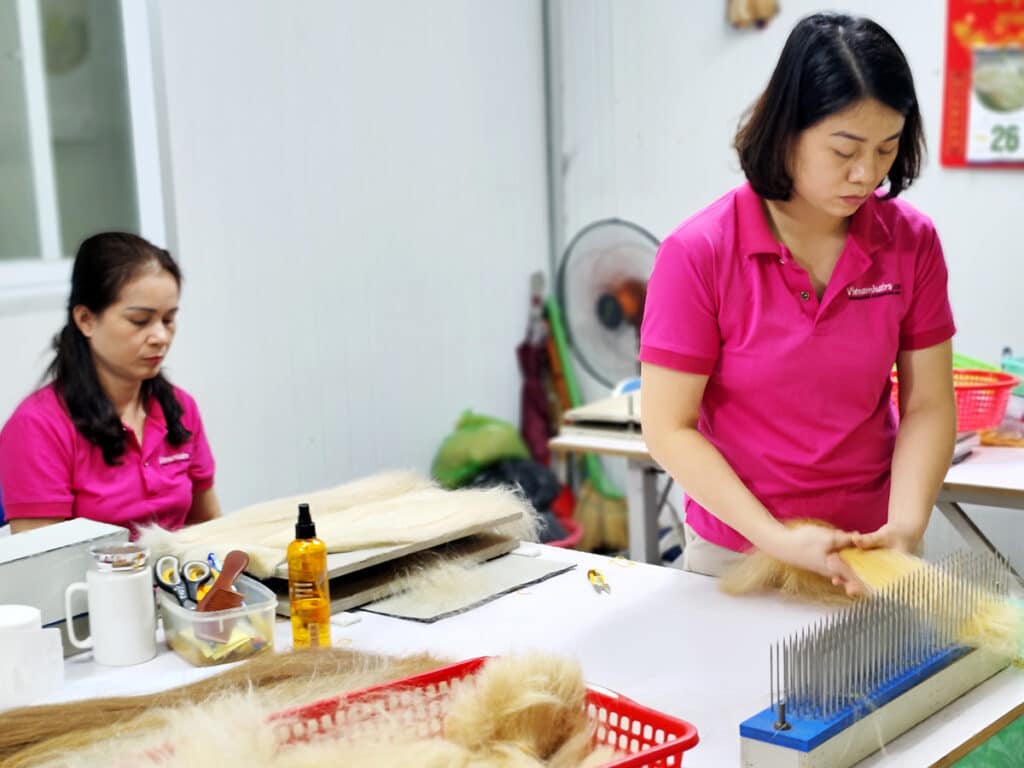
Hair is pulled through steel hackling combs to remove tangles, very short broken hair and any loose debris. This is also the first step towards Remy quality: the hair is handled so that all strands stay pointing the same way.
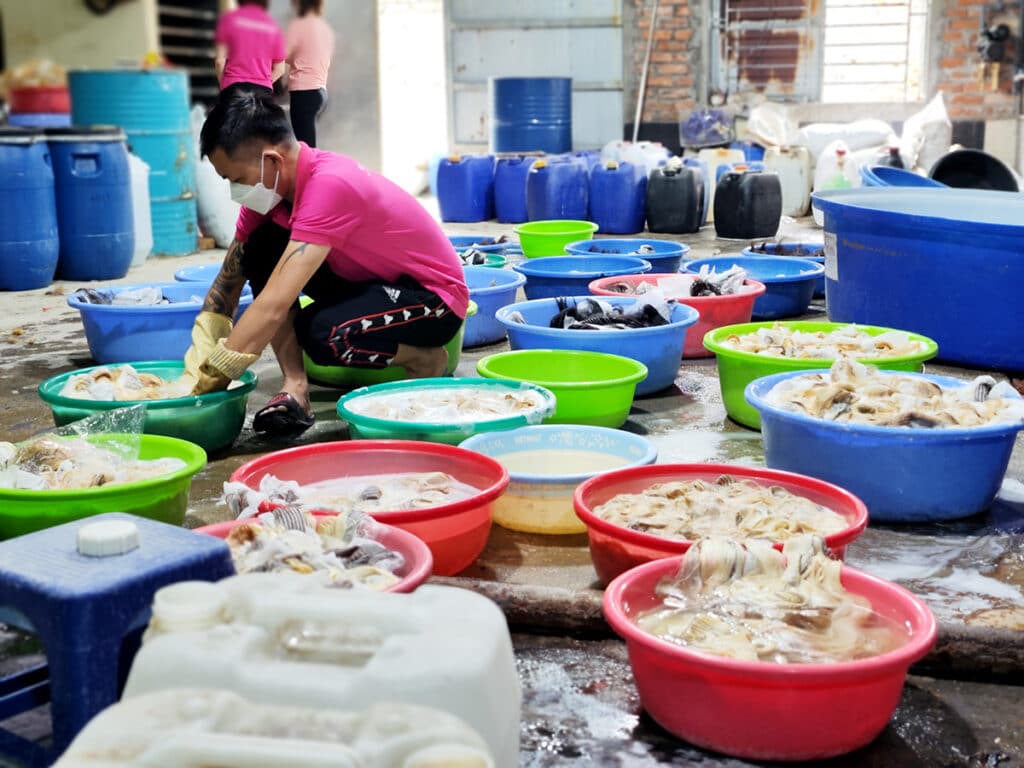
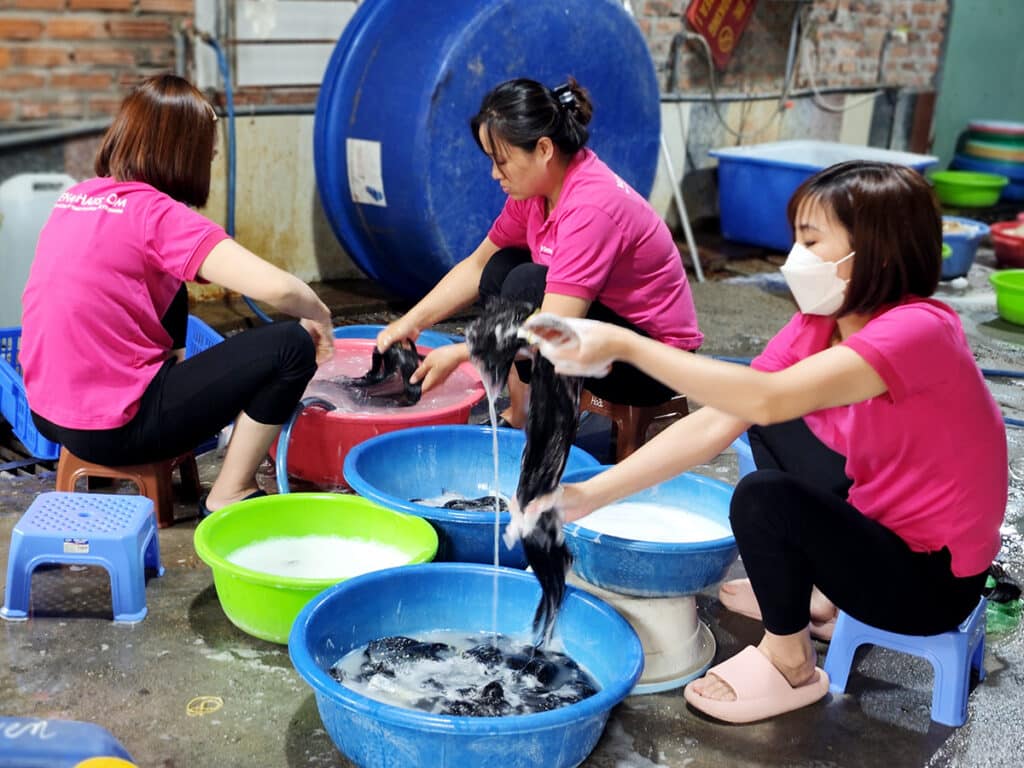
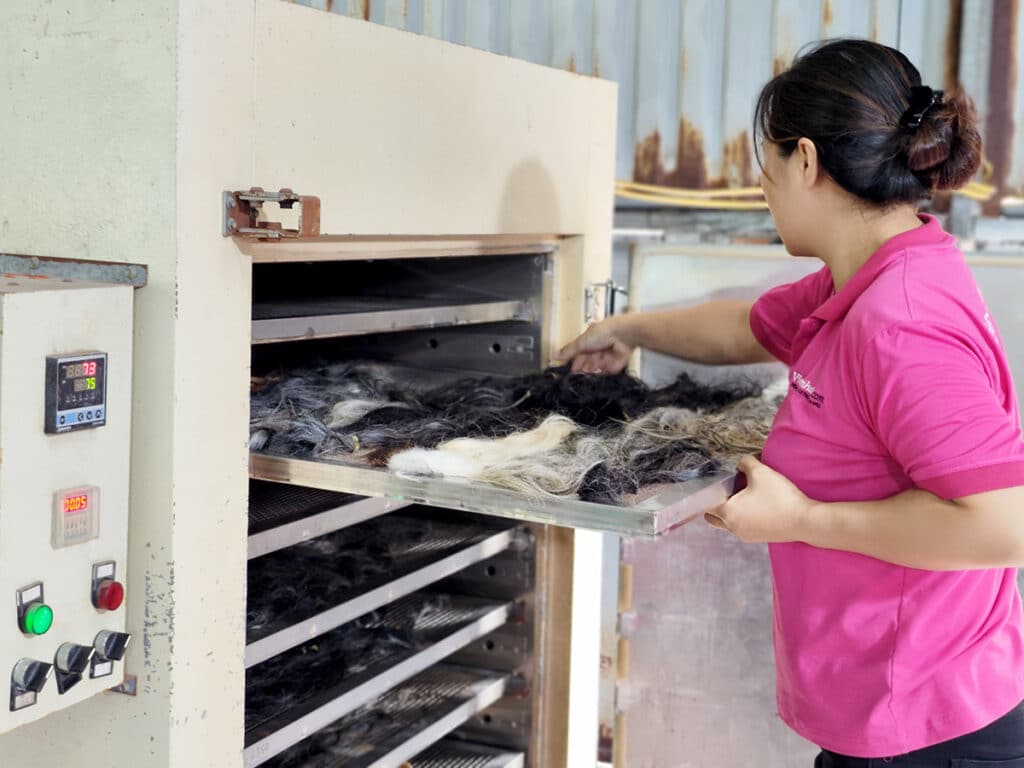
Bundles are washed by hand in large basins with shampoo — only to clean the hair, not to strip it — then rinsed and dried flat in a drying cabinet at controlled temperature, so the cuticle is not stressed by high heat.
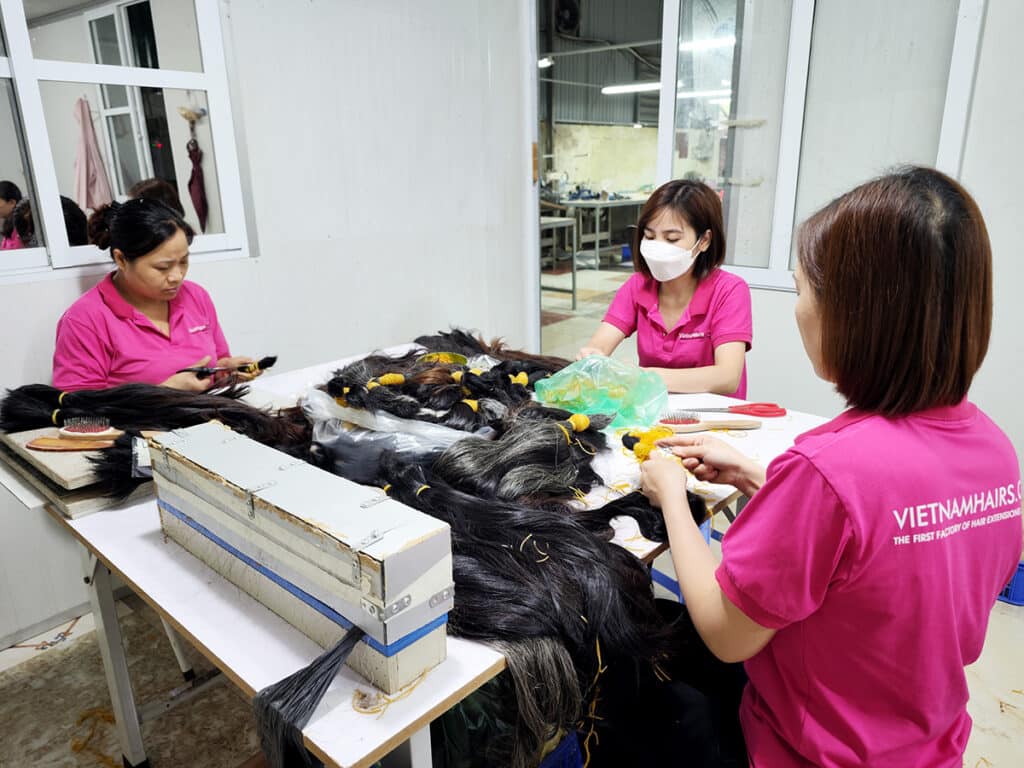
"Drawing" means removing shorter strands so that more of the bundle reaches the full length. The more we draw, the thicker the ends: single drawn hair keeps a natural taper, while double drawn and super double drawn hair are nearly as thick at the ends as at the top. Drawing is slow handwork, which is why the higher grades cost more. We explain the four grades in Single drawn vs double drawn hair.
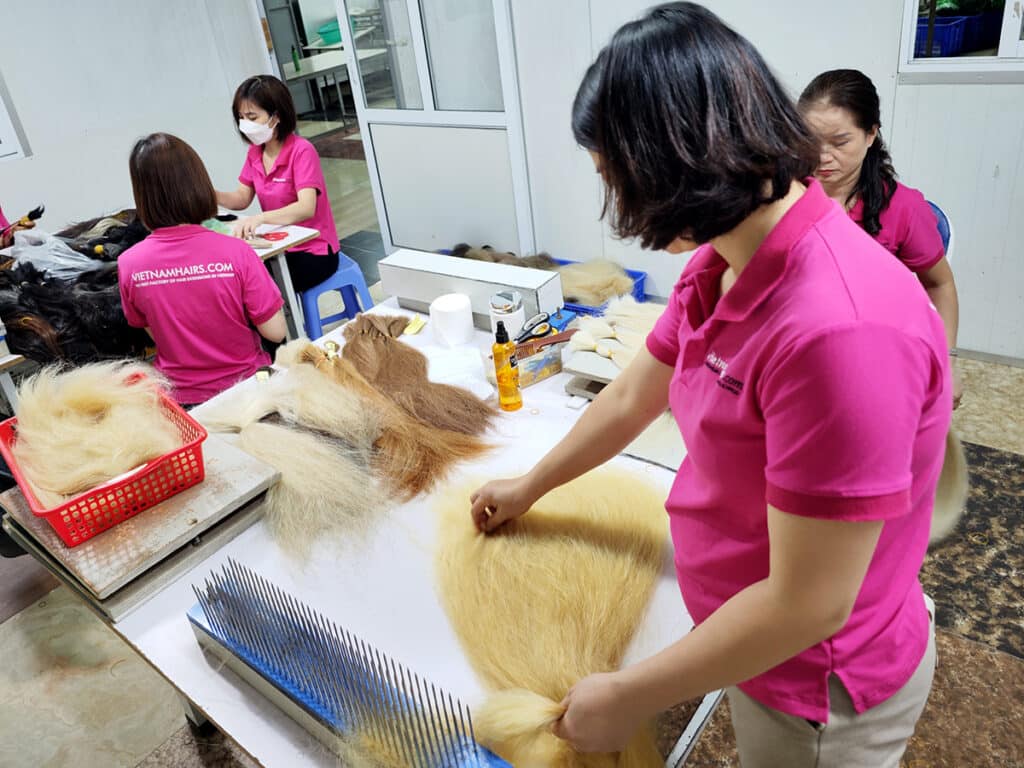
Because our hair keeps its cuticle and is not pre-coated, it can be lifted, toned and dyed to a colour chart or to a photo you send us, and steamed into wavy or curly textures. Colour work is done in small batches and compared against the swatch before the hair moves on. See how to choose your hair colour.
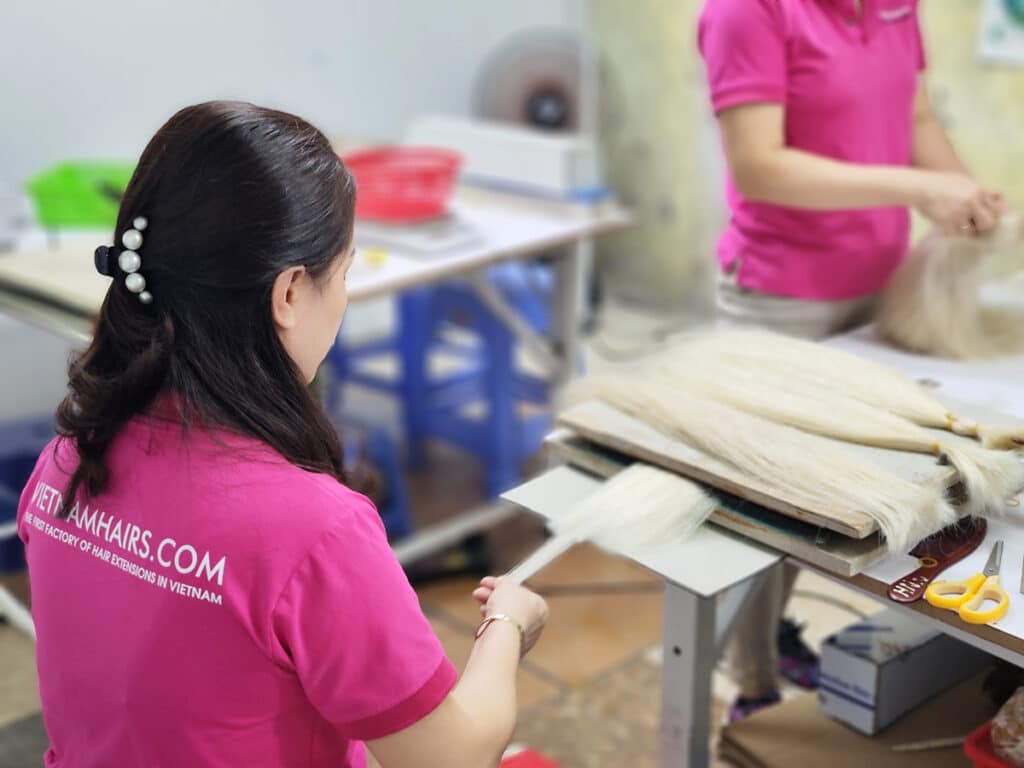
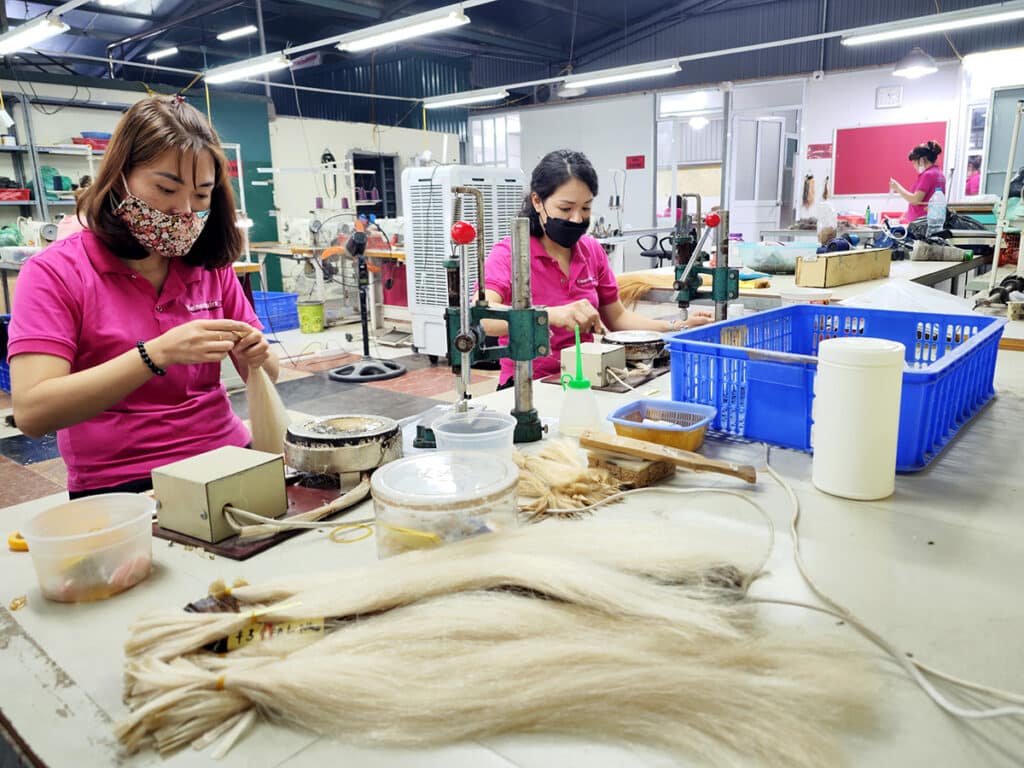
The finished hair then goes to the line that makes your product:
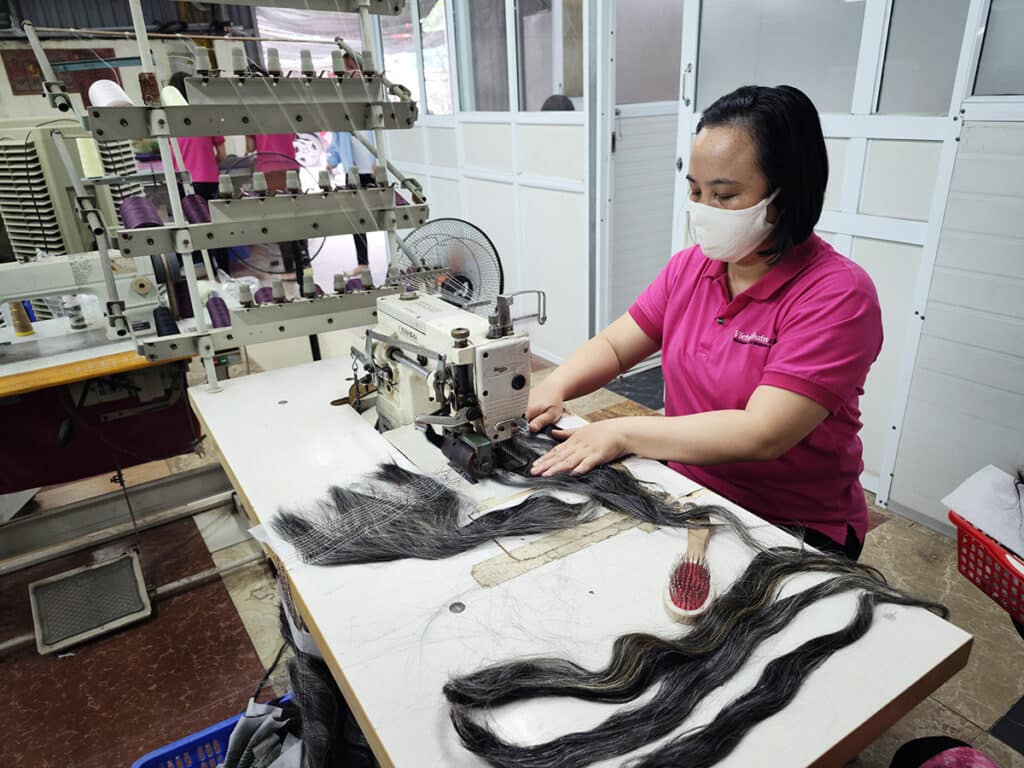
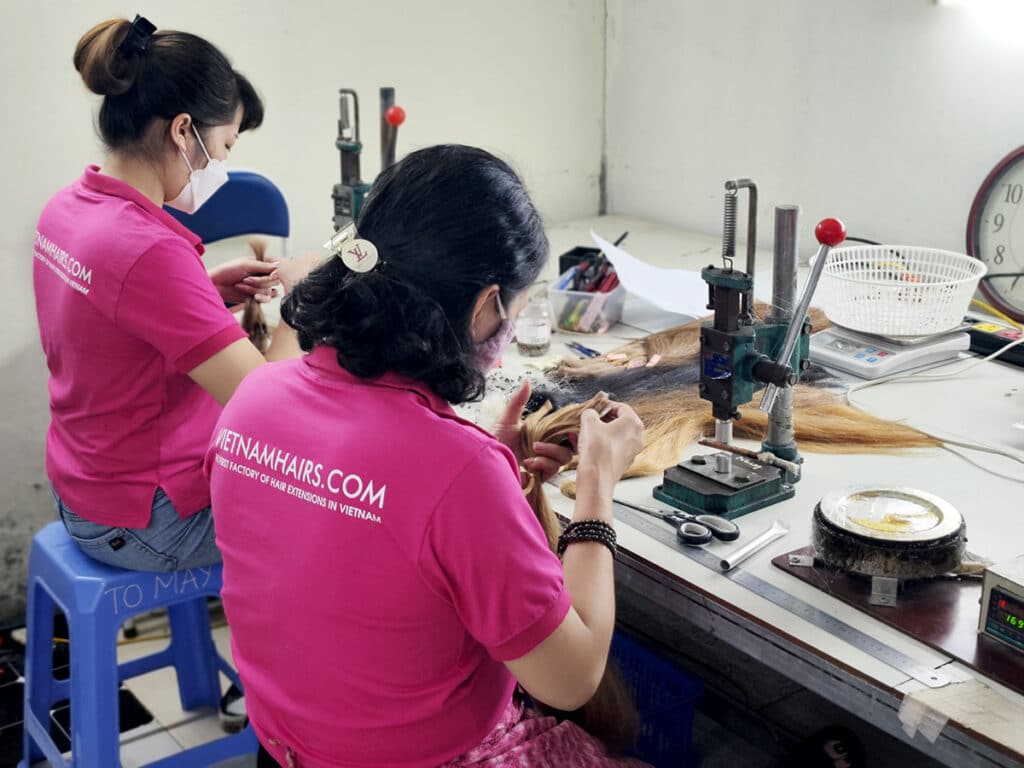
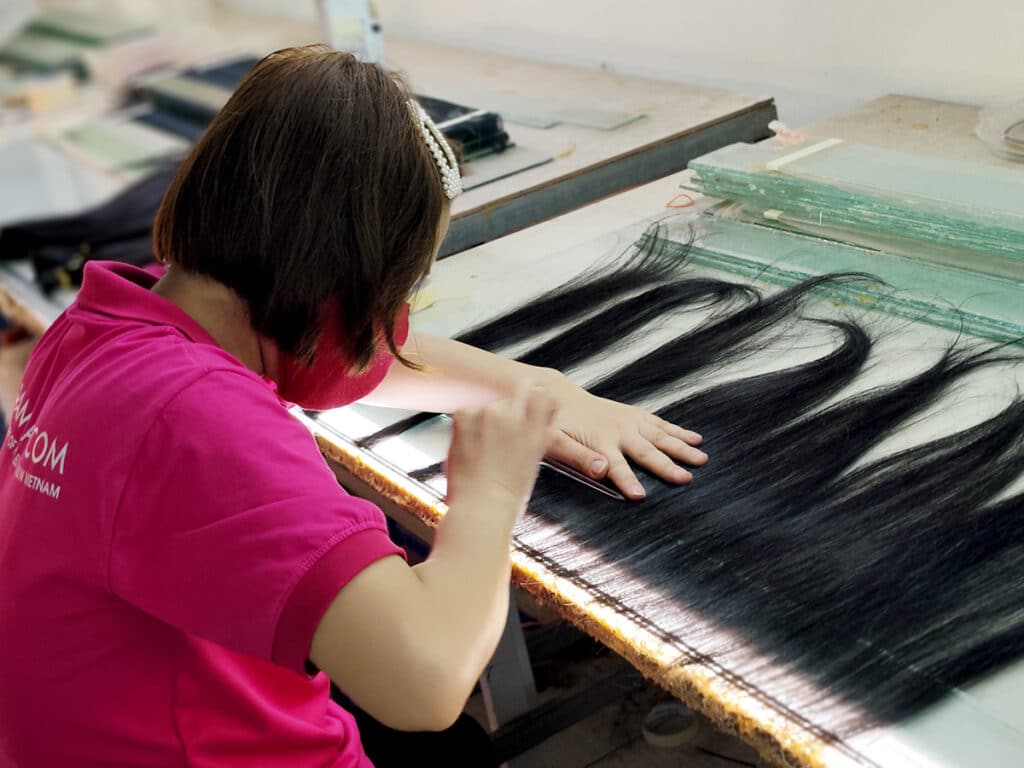
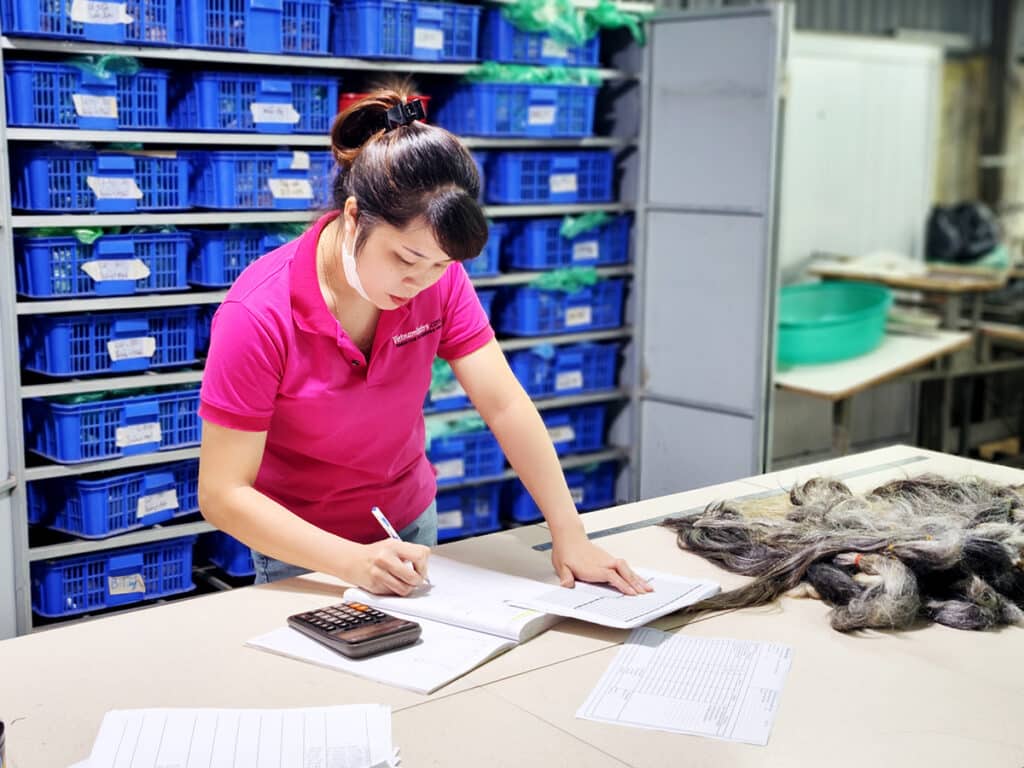
Each finished item is combed out, checked for length, colour and shedding, and weighed against the order. We then photograph and film the order and send the pictures to you to confirm before it is packed and handed to the courier. We describe shipping times and our return conditions on Quality promise, shipping and returns.
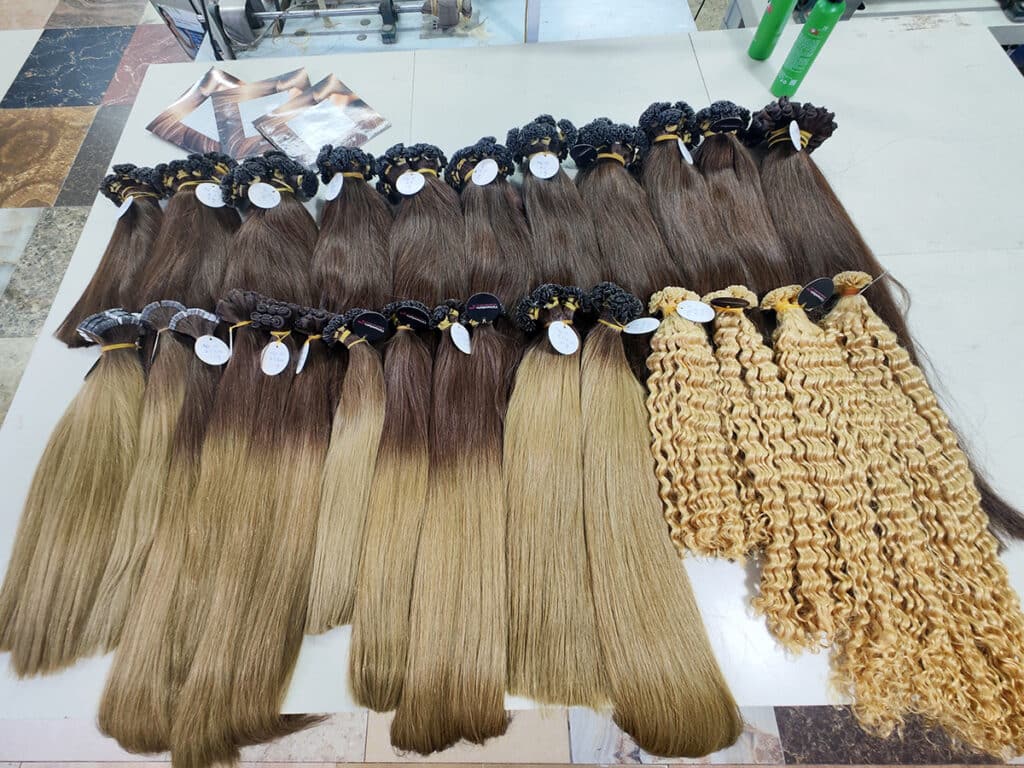
Buyers are welcome to visit the factory in Hanoi by appointment — see the Contact page. You can also follow our production in the videos below and on our Alibaba store, where we have been a verified Gold Supplier since 2012.
Last updated: November 2026